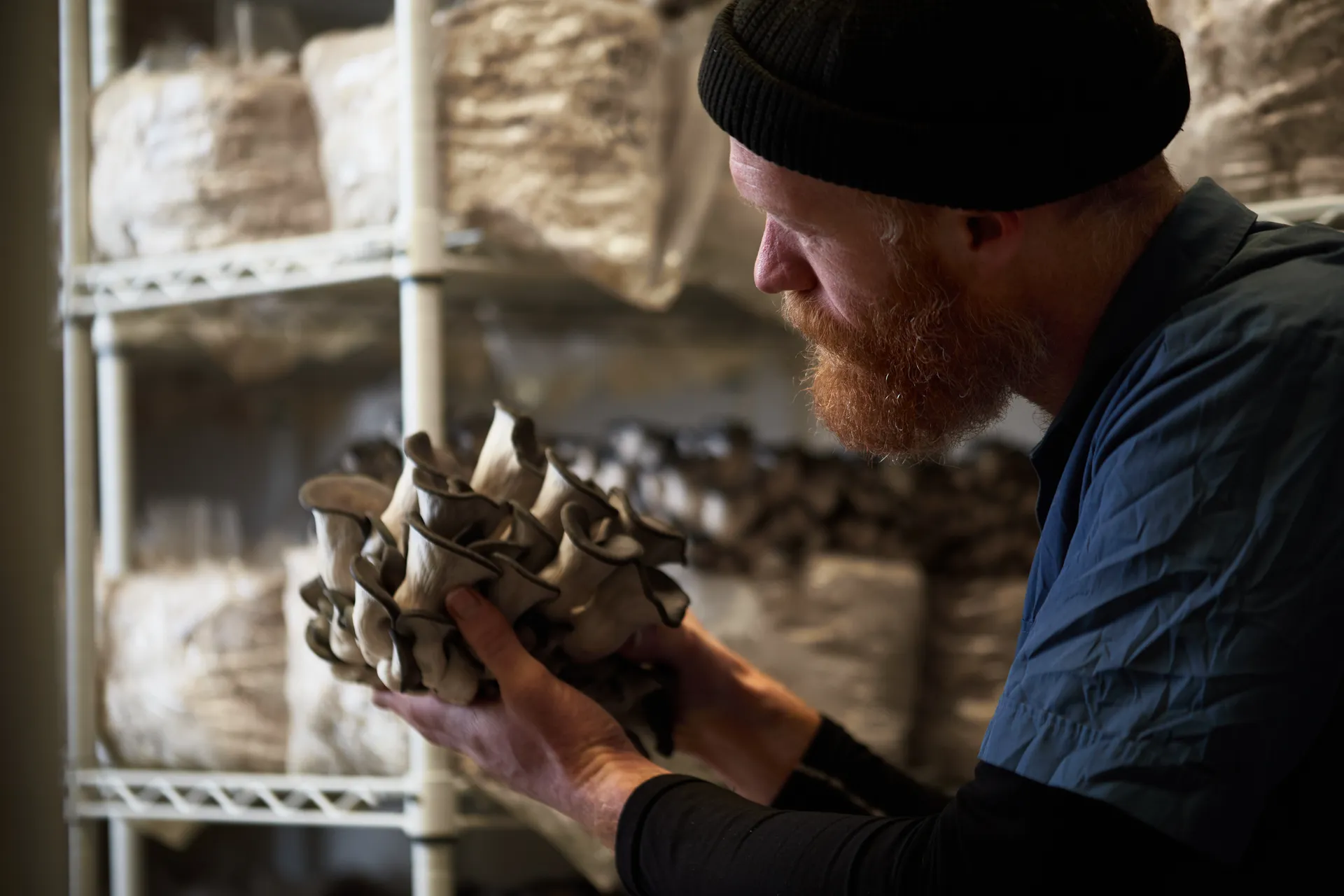
Growing More Than Mushrooms
In an urban corner of Northern Tasmania, a small mushroom farm has become part of a much bigger food story — one about entrepreneurship, local produce, creativity and the communities that grow around food.

By Launnie Team
In an urban corner of Northern Tasmania, a small mushroom farm has become part of a much bigger food story — one about entrepreneurship, local produce, creativity and the communities that grow around food.
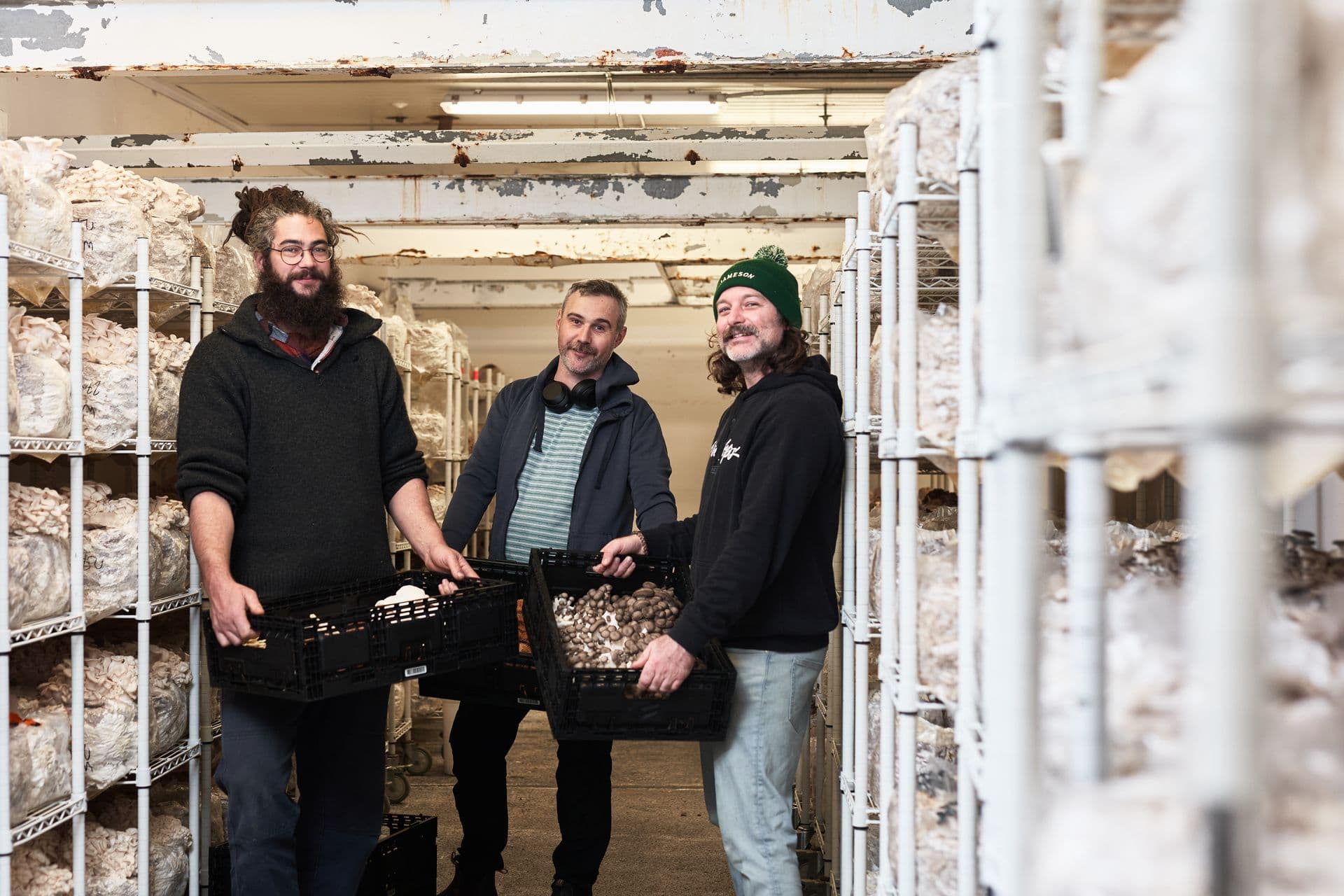
From brainstorming sessions to a mushroom farm
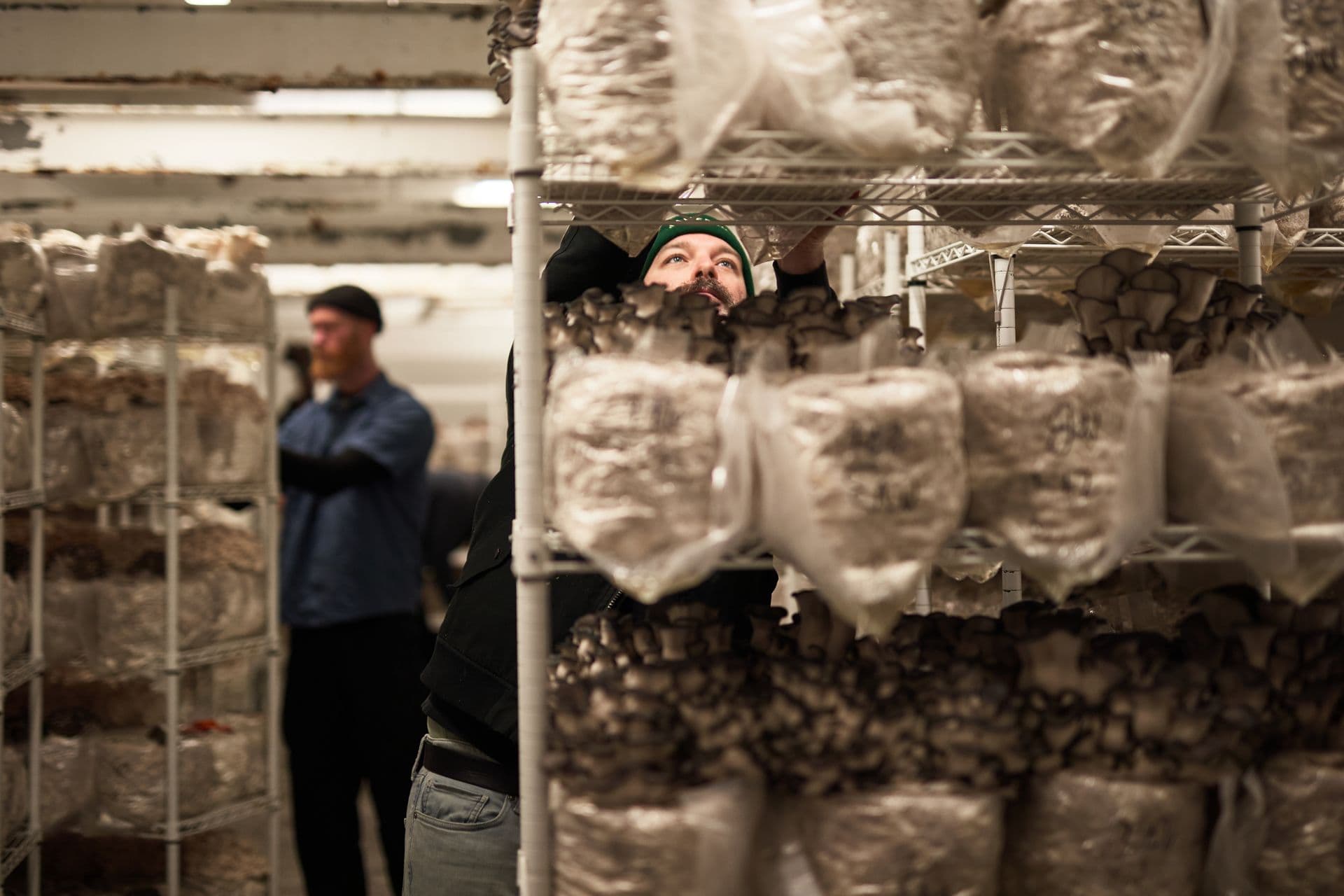
For Michael Townsend and his friend Fergus Brown, Mr Brown & Towns Mushroom Garden (BT Mushrooms) began, not with years of farming experience, but with a shared desire to work for themselves.
The pair grew up in Launceston and spent their twenties exploring different ideas for self-employment, regularly getting together for brainstorming sessions. Then an unexpected opportunity arrived: mushroom farming equipment landed on Michael’s doorstep.
“We were both exploring ultimately how to work for ourselves throughout our twenties.”
Michael was intrigued, but knew he didn't want to take it on alone. Fergus said yes, and the two moved in together while they learned how to become mushroom farmers from scratch. For around a year, they worked during the day, then spent their afternoons learning the intricacies of mushroom production through online forums, YouTube tutorials and plenty of experimentation.
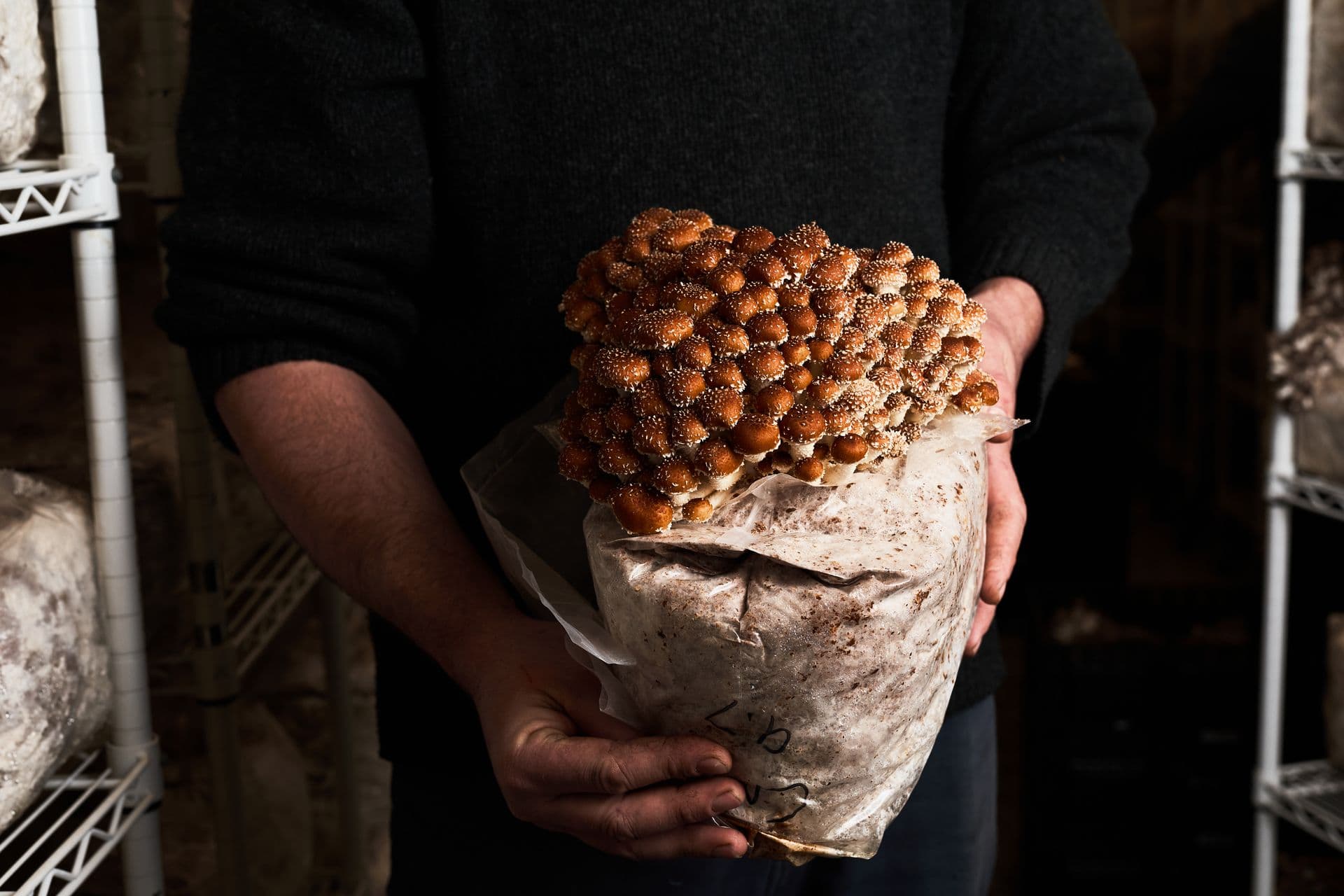
There was something really special about seeing that first lot of mushrooms come through and being like, 'We did it! Yeah, it worked.
Michael Townsend
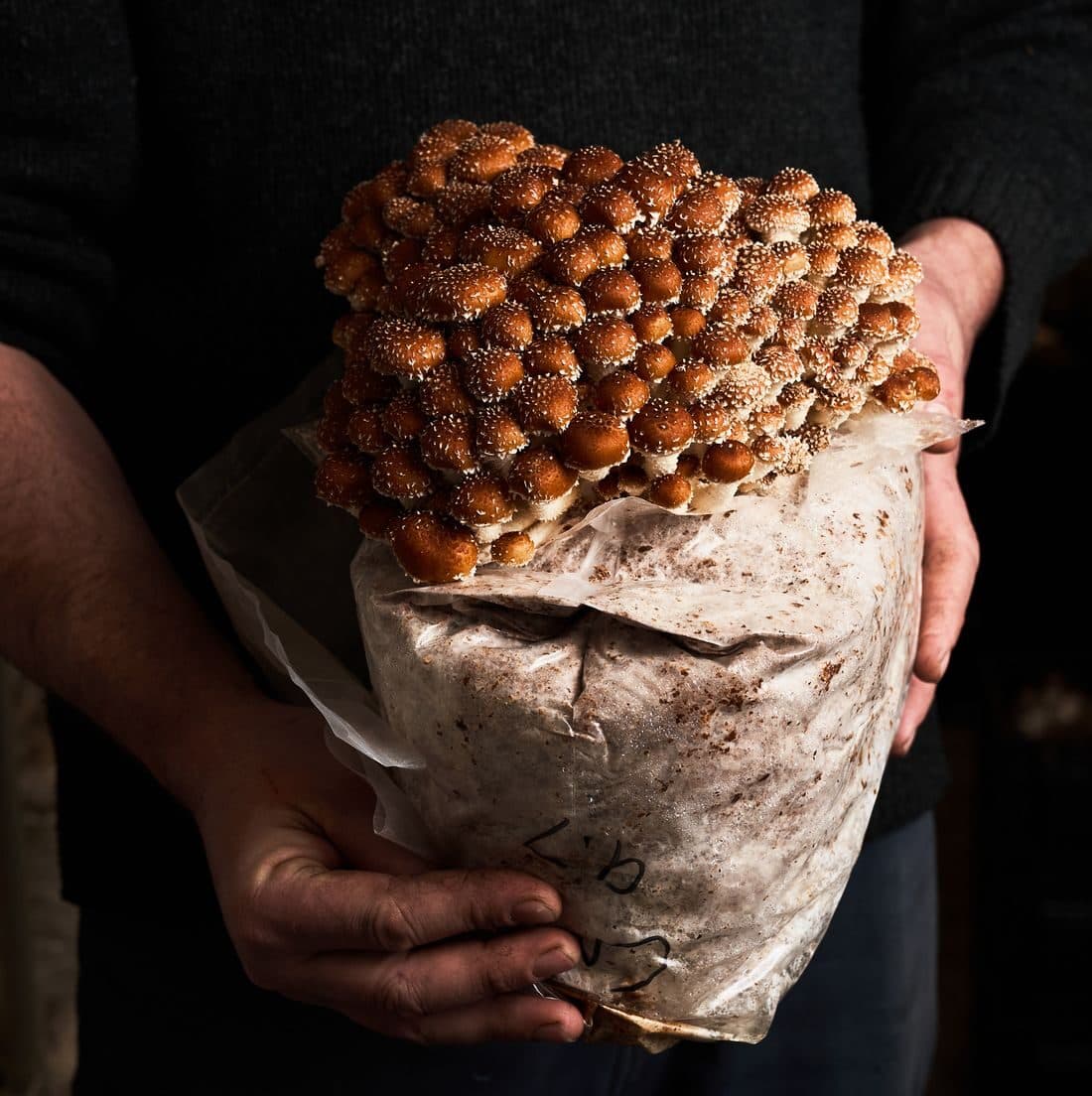
Their first crop was grown on straw which is a forgiving place for novice mushroom farmers to start. When the first mushrooms finally appeared, the achievement was simple but significant.
The celebration was equally uncomplicated: sautéed mushrooms on good sourdough with butter, and a beer.
Growing a business and a community
Five or six years on, the farm has become much more than a way for two friends to create employment for themselves. It has become a workplace, a network and a community.
To begin with, we were just trying to find some employment for us, and now we've got a beautiful crew of friends and family that are here.
For Michael, that evolution is one of the most rewarding parts of the business. BT Mushrooms has created a place where people can come to work without having to leave themselves at the door, a workplace shaped by relationships, responsibility and shared values.
That sense of connection extends beyond the farm. Delivering mushrooms to local chefs, meeting customers at markets and working alongside other producers has created an extended food community. For Michael, these relationships are not simply commercial transactions.
The relationship is not, 'You give us money, we give you mushrooms.' The is shared values.
It is a useful reminder that food systems are built on people as much as infrastructure. Growers, chefs, restaurant owners, customers and market communities are connected by more than the exchange of a product. They share ideas, values, knowledge and a commitment to place.
A local food system, grown in the city
Mushrooms are particularly suited to telling this story. They can be grown in an urban environment, close to the kitchens and communities that use them, reducing the distance between producer and plate.
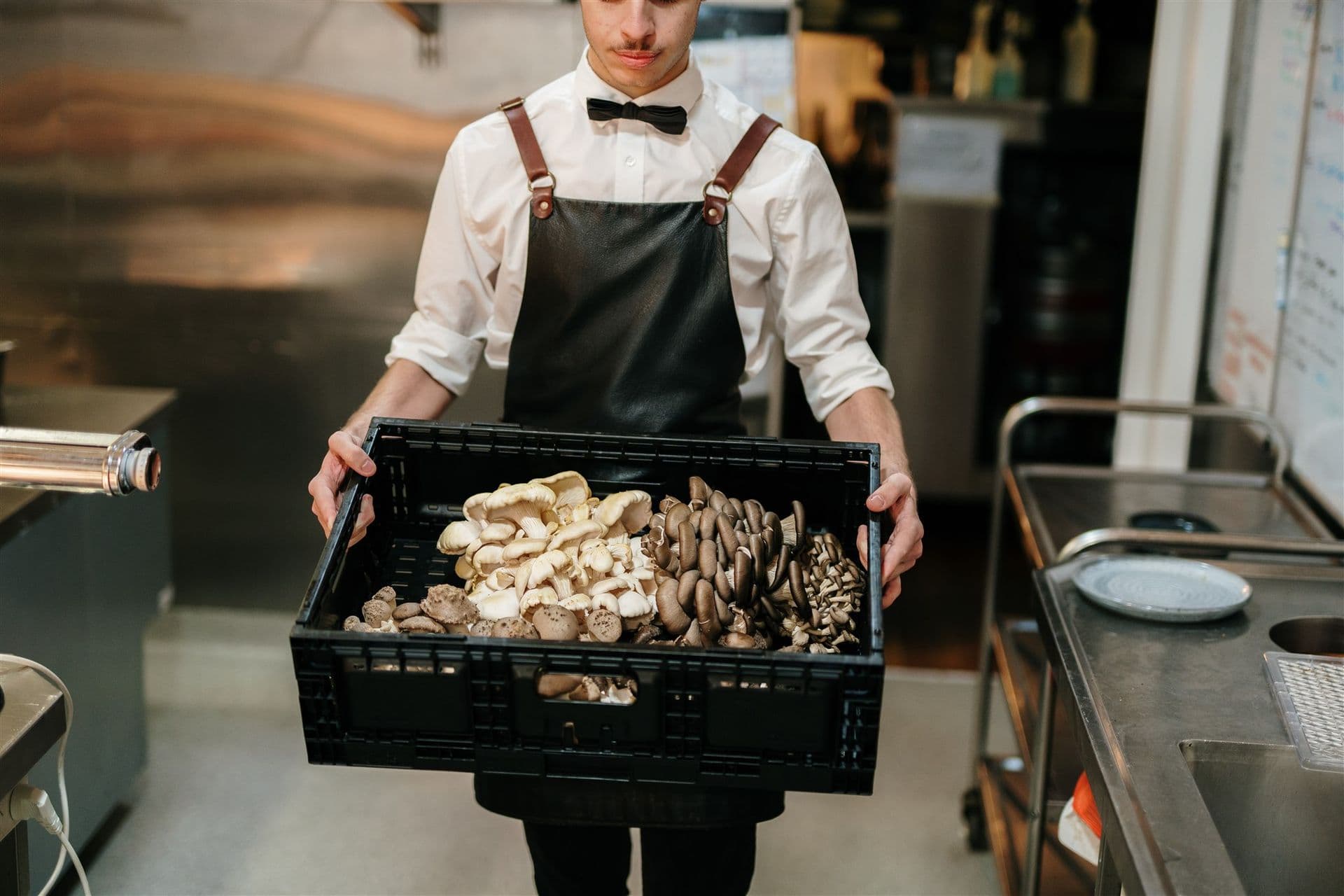
For chefs, that proximity matters. Mushrooms have a relatively short shelf life, making local production an important part of getting high-quality produce into kitchens. BT Mushrooms has helped broaden the range of locally grown mushrooms available to Tasmanian chefs, at a time when interest in both mushroom varieties and local sourcing was growing.
In order for chefs to get an extremely quality product, it needs to be grown at their back door.
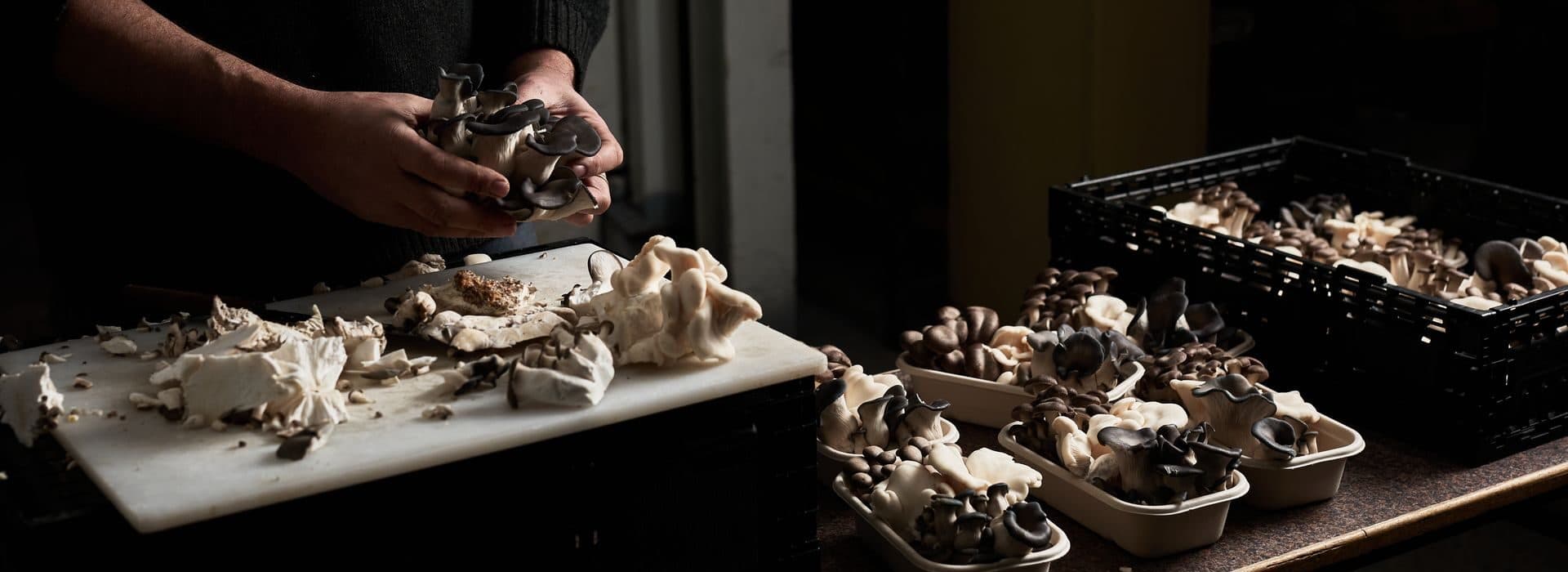
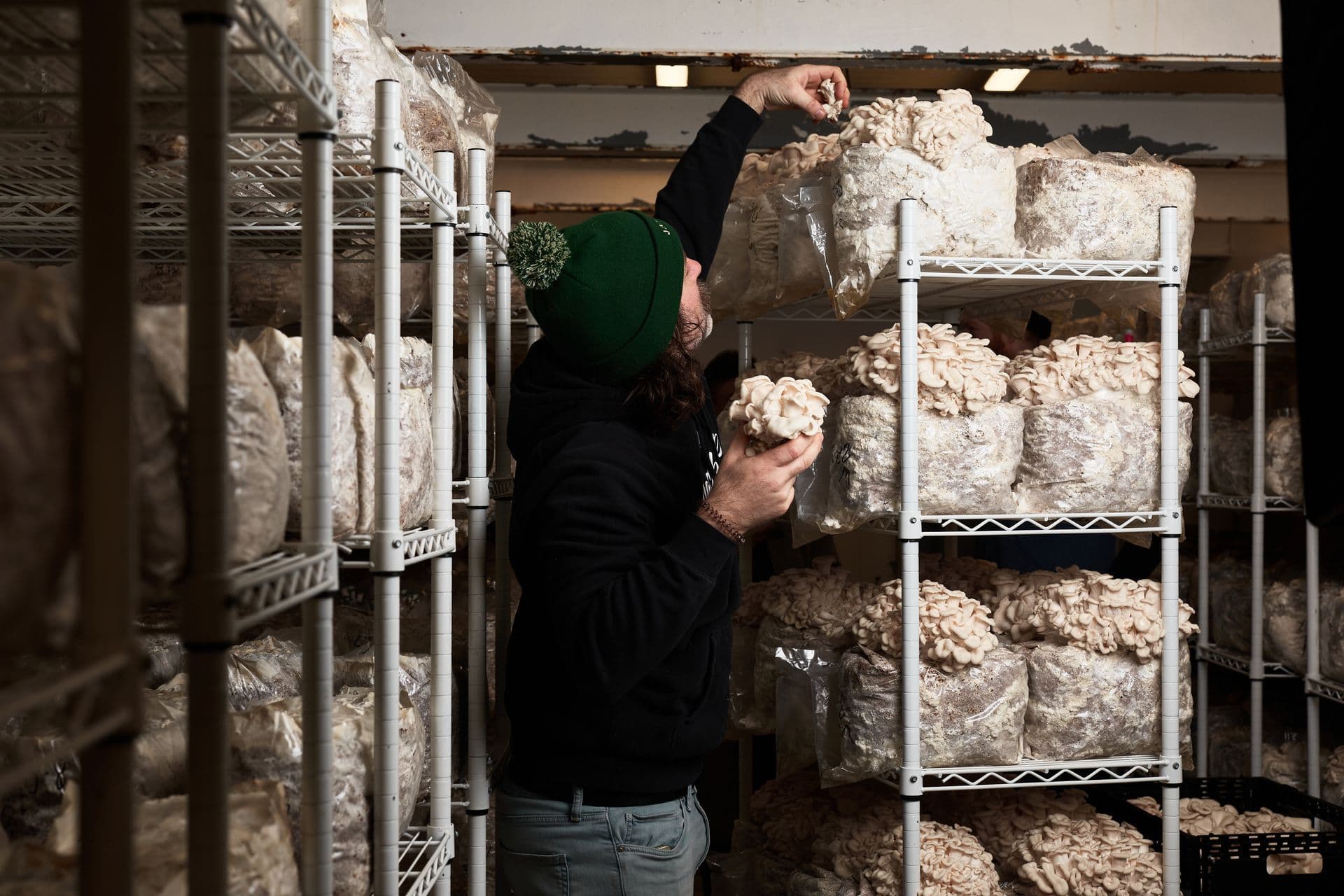
The business has also had to learn how to be resilient. Mushroom farming does not stop. Harvesting can mean working every day of the week, harvesting twice a day in the warmer months. For a growing business, finding a sustainable rhythm and maintaining a life outside work can be as important as getting the crop right.
BT Mushrooms has responded by building capacity, planning for fluctuations in demand and finding ways to make the most of surplus produce. Mushrooms that aren’t sold fresh can be dehydrated into shelf-stable products, turning potential waste into another opportunity.
As a mushroom farmer or a local producer, you want to be reliable and consistent.
Where food, creativity and place meet
Of course, the other reason mushrooms have found such a place in Tasmania's food culture is their sheer creative potential.
Chefs have used king oyster mushrooms to mimic pulled meat, lion's mane and oyster mushrooms in tempura, and colourful varieties to add texture and visual drama to dishes. For Michael, that creativity is part of what makes the relationship between grower and chef so rewarding.
Some of these mushrooms look like they belong in a terrarium somewhere, something from under the ocean.
But perhaps the most interesting story is not what ends up on the plate. It is everything that happens before it gets there: two Launceston friends taking a chance on an unfamiliar crop; learning by doing; building a business around their values; creating work for others; developing relationships with chefs and customers; and helping strengthen the local supply of food grown close to where it is eaten.
More than what's on the plate
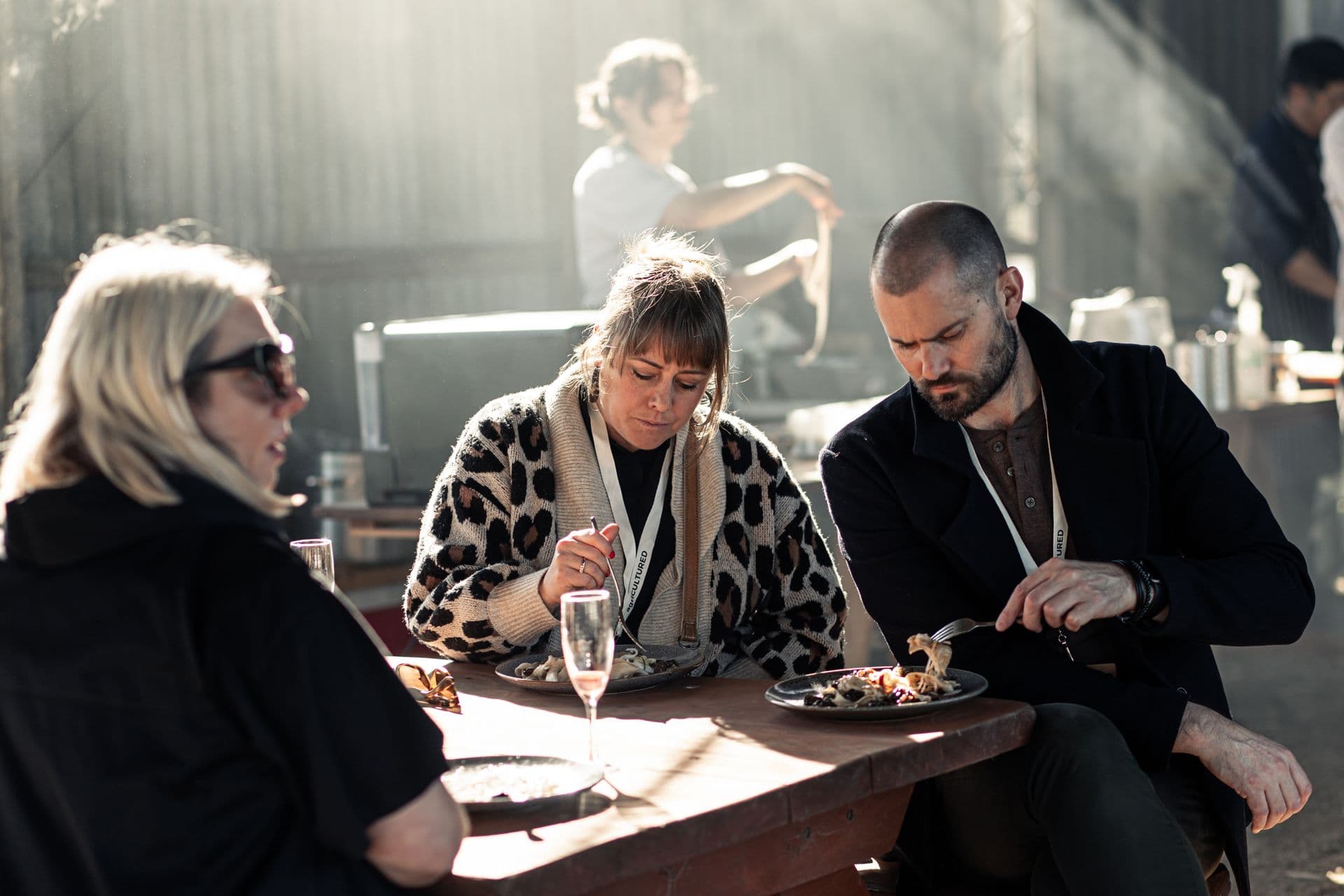
That is the broader story of gastronomy in Launceston. Food connects people, place and culture and great food begins long before it reaches the table.
BT Mushrooms is one small part of a living food culture that includes growers, makers, chefs, markets, customers and communities. Its story shows how food can create pathways into entrepreneurship, build local connections and contribute to a more resilient food system.
And it began with something wonderfully simple: two friends, an unexpected opportunity, and a willingness to learn how to grow something neither of them had ever grown before.
More Stories
We acknowledge Tasmanian Aboriginal People as traditional custodians of this land, we pay respect to Elders past and present, as they hold the memories, traditions, culture and hope for generations to come. We recognise and value Aboriginal histories, knowledge and lived experiences and commit to being culturally inclusive and respectful in our working relationships with Aboriginal People.

Launceston Visitor Information Centre
Town Hall, 18-28 St John Street,
Launceston TAS 7250.
Phone: 1800 651 827
Mon to Fri:9am - 5pm
Sat & Sun:10am - 2pm
Public Holidays:10am - 2pm